HOME FOR cHRISTMAS
sHELTER AND REFUGE IN JESUS
Psalm 121
R3-1803
What does it do to your heart to realize that Mary didn’t make it home for Christmas? (Repeat)
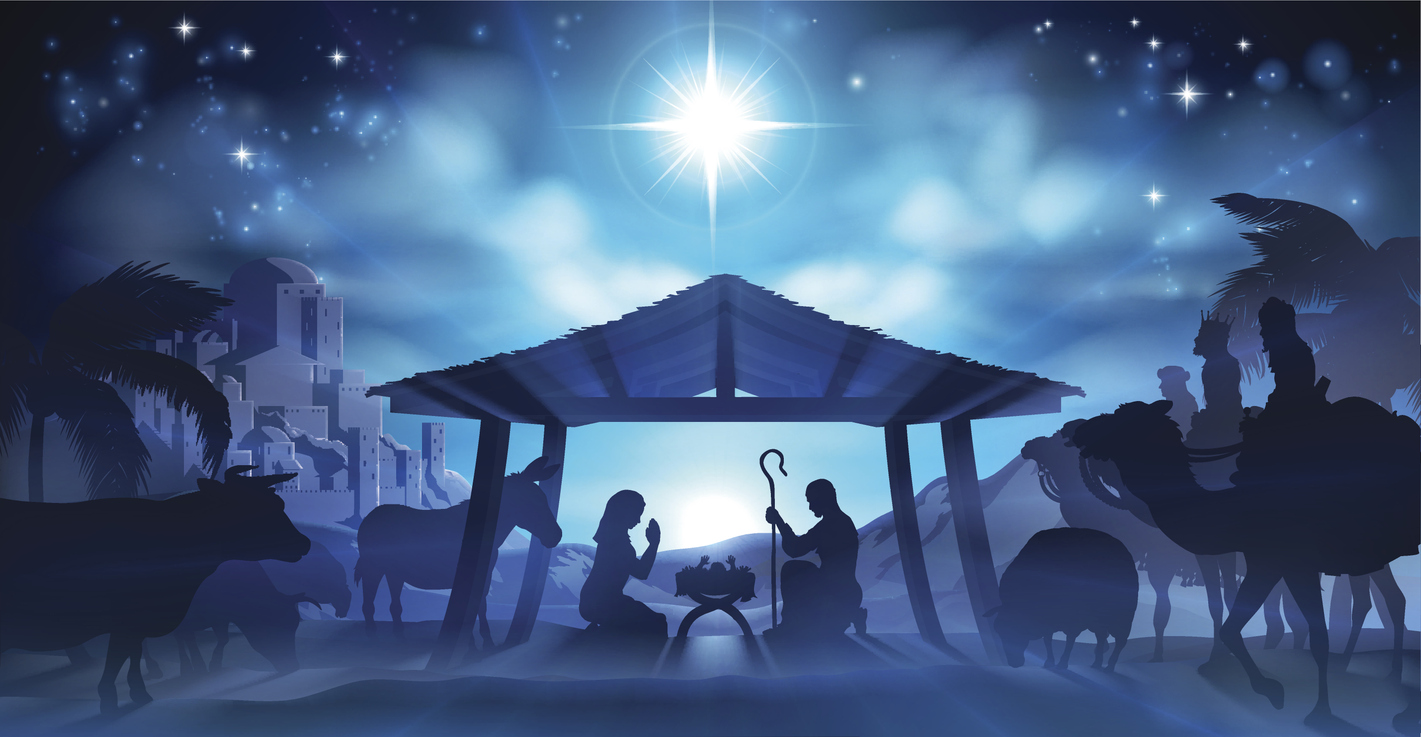
If anybody needed to be home for Christmas, it was Mary.
●Slide #: Luke 2:1-7: In those days Caesar Augustus issued a decree that a census should be taken of the entire Roman world. (This was the first census that took place while Quirinius was governor of Syria.) 3 And everyone went to his own town to register.
●Slide #: 4 So Joseph also went up from the town of Nazareth in Galilee to Judea, to Bethlehem the town of David, because he belonged to the house and line of David. 5 He went there to register with Mary, who was pledged to be married to him and was expecting a child.
●Slide #: 6 While they were there, the time came for the baby to be born, 7 and she gave birth to her firstborn, a son. She wrapped him in cloths and placed him in a manger, because there was no room for them in the inn.
“No room for them in the inn!”
How many of us feel like that—or have felt like that.
We just need to go home…find a shelter…a refuge from some of the troubles that beset us.
So Mary and Joseph are on their way to Bethlehem to pay those taxes, and so all of that to say this – this isn’t a joyous trip, it is like a trip to the IRS, or like going to the DMV to renew your license, that’s not a joyous experience, so going to the dentist for a root canal or going to the doctor because your bowels are impacted.
Most pregnant women are told not to travel in their last trimester of pregnancy. Not Mary. She made the arduous trip in her ninth month on the back of a bouncing donkey. Sitting on the back of a donkey for Mary felt like she was dribbling a basketball in her abdomen. They both probably wondered if she’d go into labor on the road.
There were no Triple T truck stops to potty and buy a Snickers. Can you imagine how many pit stops poor Mary had to make?
Happy meals and Dairy Queen Blizzards could not be found along the way. The couple probably survived on stale bread, moldy cheese and a few dried figs.
And besides all of that her sandal straps were cutting blisters into her swollen ankles.
Any lone traveler crossing from Galilee into Samaria would be at risk of attack and would certainly not receive lodgings or any other type of assistance on the journey.
Thank God we all don’t have to walk to Washington D.C. every year! What a pain!
You have to put yourself in their sandals and realize that they are going into an awkward situation. Like many of us, when we go home, family is going to be there.
And they are going back to the place of their ancestry, which means there will be a little bit of a family reunion.
Certainly there is extended family that is going to be there and Mary is pregnant, but they are not married, they are engaged, and this is going to raise some eyebrows and raise some questions. I wonder if a lot of this ride was them strategizing about how they were going to reflect the questions.
Many of you know exactly what I’m talking about because you are strategizing right now. Right? Because everybody has some crazy relative with some weird fascination with your dating life, or you know, there is some situation that you don’t want to talk about, like you’re going to get one hundred questions about the job you lost in the last month, or family issues are going to come up and you naturally strategize how you’re going to deflect the questions or change the subject or make sure I’m not alone with this particular relative.
She needed a home, a place of refuge, to shelter her from the struggles of life.
Many of us need a shelter—a refuge—a home to shield us from the struggles we all face.
Mary spent about two years in Bethlehem before they had to move and find another shelter.
●Slide #: Matthew 2:1-3: After Jesus was born in Bethlehem in Judea, during the time of King Herod, Magi from the east came to Jerusalem 2 and asked, “Where is the one who has been born king of the Jews? We saw his star in the east and have come to worship him.”
3 When King Herod heard this he was disturbed, and all Jerusalem with him….
●Slide #: Matthew 2:11: On coming to the house, they saw the child with his mother Mary, and they bowed down and worshiped him. Then they opened their treasures and presented him with gifts of gold and of incense and of myrrh.
●Slide #: Matthew 2:13: When they had gone, an angel of the Lord appeared to Joseph in a dream. “Get up,” he said, “take the child and his mother and escape to Egypt. Stay there until I tell you, for Herod is going to search for the child to kill him.” …
●Slide #: Matthew 2:19-20: After Herod died, an angel of the Lord appeared in a dream to Joseph in Egypt 20 and said, “Get up, take the child and his mother and go to the land of Israel, for those who were trying to take the child’s life are dead.”
●Slide #: Matthew 2:21-23: So he got up, took the child and his mother and went to the land of Israel. 22 But when he heard that Archelaus was reigning in Judea in place of his father Herod, he was afraid to go there. Having been warned in a dream, he withdrew to the district of Galilee, 23 and he went and lived in a town called Nazareth.
The childhood years of Jesus were spent looking for shelter, a place to call home.
Finally found it in Nazareth.
And for the next 25 years, Mary and Jesus finally found shelter—a refuge—from the dangers of life.
Where do we find shelter?
Sometimes events occur and we feel like a dry barren wind off a lonely desert. And something inside us begins to melt.
At other times difficulties feel like a chilling mist. Seeping through our pores, it numbs the spirit and fogs the path before us.
What is it about pain and trouble and discouragement that strips our lives of joy and leaves us feeling vulnerable and exposed!
I don’t know all of the reasons, but I know one of the reasons: We don’t have a refuge.
Shelters are hard to find these days…you know, people who care enough to listen; who are good at keeping secrets.
We all need harbors to pull into when we feel weather-worn and beaten down by the storm.
Galatians 6:2: Carry each other’s burdens, and in this way you will fulfill the law of Christ.
(Love is the law of Christ)
LESSONS FROM A TAVERN By Charles Swindoll
An old Marine Corps buddy of mine, to my pleasant surprise, came to know Christ after he was discharged. I say surprise because he cursed loudly, fought hard, chased women, drank heavily, loved war and weapons, and hated chapel services
A number of months ago, I ran into this fellow, and after we’d talked awhile, he put his hand on my shoulder and said, “You know, Chuck, the only thing I still miss is that old fellowship I used to have with all the guys down at the tavern. I remember how we used to sit around and laugh and drink a pitcher of beer and tell stories and let our hair down. I can’t find anything like that for Christians. I no longer have a place to admit my faults and talk about my battles – where somebody won’t preach at me and frown and quite me a verse.”
It wasn’t one month later that in my reading I came across this profound paragraph: “The neighborhood bar is probably the best counterfeit that there is to the fellowship Christ wants to give his church. It’s an imitation, dispensing liquor instead of grace, escape rather than reality – but it is a permissive, accepting, and inclusive fellowship. It is unshockable. It is democratic. You can tell people secrets, and they usually don’t tell others or even want to. The var flourishes not because most people are alcoholics, but because God put into the human heart the desire to know and be known, to love and be loved, and so many seek a counterfeit at the price of a few beers With all my heart,” this writer concludes, “I believe that Christ wants his people to be unshockable, a fellowship where people can come in and say, ‘I’m sunk, I’m beat, I’ve had it.’ Alcoholics Anonymous has this quality – our churches too often miss it.”
Now before you take up arms to shoot some wag that would compare your church to the corner bar, stop and ask yourself some tough questions, like I had to do.
Let me be painfully specific. Where do you turn when the bottom drops out of your life? Or when you face an embarrassing issue, maybe even scandalous?
A woman discovers her husband is a practicing homosexual. Where in the church can she find help where she’s secure with her secret?
Your spouse talks about separation or divorce. To whom in the church do you tell it?
Your daughter is pregnant, and she’s run away – for the third time. She’s no longer listening to you. Who do you tell that to?
Financially you were unwise, and you’re in deep trouble.
Or your wife is having an affair.
Or a your husband is an alcoholic. Or something as horrible as getting back the biopsy from the surgeon, and it reveals cancer, and the prognosis isn’t good.
Or you had an emotional breakdown. To whom do you tell it?
What do you need when circumstances of your life and threaten to engulf you with pain and confusion?
You need a shelter, a listener. Someone who understands.
Travelers along the journey with us. They can understand and help.
But they face the same fears we do.
And, what about times when they are not to be found?
So with friends like these, who needs divine help? Uh…that would be every last one of us.
Human help is wonderful, but, it is always human
But, to whom do you turn when there is no one to tell your troubles to? Where do you find shelter?
Like to call our attention to a man who found his refuge and shelter in the Living Lord.
His name? David.
Cornered, bruised by adversity, and struggling with low self-esteem, he wrote Psalm 31.
●Slide #: Psalm 31:1-2: In you, O LORD, I have taken refuge; … Turn your ear to me; come quickly to my rescue; be my rock of refuge, a strong fortress to save me.
Failing in strength, wounded in spirit, David cries out for a “refuge.”
The Hebrew term speaks of safety, security, secrecy. He tells Jehovah God that He was looking to Him for refuge.
Psalm 121: A song of ascents.
Psalm’s of Ascents: 120-134: journey up to the high places of the Temple.
Songs written for Pilgrims returning to Jerusalem after the Babylonian Captivity.
15 steps leading up to temple.
All begin with a distress call—not a bad place to begin a journey.
Sometimes the best motivation we’ll ever have for going someplace else is distress in someplace old.
Life can change in the blink of an eye. All well, go to office, job deleted, doctor visit more serious than imagined.
Thought you and your spouse were fine, learned through a third party that you are not.
My journals?
Switch from first person pronouns to second person pronouns between verses 2 and 3.
Not unusual. Pilgrim speaks in the first tow verses and a worship leader responds in the remaining verses.
Psalm 120 unfolds with the pilgrim still far from home. He looks to the hills in the distance and wonders and probably fears what might be on the other side.
He anticipates the long, arduous journey ahead and wishes he could be home in the blink of an eye.
●Slide #: Psalm 121:1-2: I lift up my eyes to the hills — where does my help come from? 2 My help comes from the LORD, the Maker of heaven and earth.
“Maker of Heaven and Earth” reminds us that all is God’s turf. We are on His territory.
Creator: Some powerful God to help him on his journey.
Slit illustration: time runs backwards
0000000000000000000000000000000000000
●Slide #: Psalm 121:3 He will not let your foot slip —
An ancient traveler made his journey primarily by foot. Terrain could be treacherous. A twisted ankle or a broken foot could leave him stranded far from water. It could have been his ticket to the grave.
Here is what Christ can do for us on our journey.
Jude 24-25: “To him who is able to keep you from falling and to present you before his glorious presence without fault and with great joy— 25 to the only God our Savior be glory, majesty, power and authority, through Jesus Christ our Lord, before all ages, now and forevermore! Amen.”
Name a way that He does that?
Dodging cars on freeway
●Slide #: Psalm 121:3b-4: he who watches over you will not slumber; indeed, he who watches over Israel will neither slumber nor sleep.
I am reminded that He never dozes off.
God never slumbers
Ancient pagan peoples commonly held the notion that god’s slept, or hibernated, or even died during the winter months. The protector of Israel does not slumber or sleep.
Journeys long enough that they necessitated sleeping somewhere along the way.
Perhaps the wind whistled eerily around them.
Perhaps a wild dog howled in the distance.
Scarier still, perhaps a bandit lurking nearby waited for them finally to sleep before creeping into camp to rob and decimate them.
When they were too exhausted to go on, they reassured themselves that Yahweh wouldn’t blink an eye. Why? Because some one had best stay awake.
Slumbers: Airport: Dry mouth: “I was snoring, wasn’t I? If I do it again, some one poke me in the ribs.”
Never sleeps:
Fore arm shiver dream.
He never wakes up suddenly with a start when the earth rumbles beneath our feet and be confused about what is going on.
●Slide #: Psalm 121:5 The LORD watches over you —
“The Lord watches over (protects) you is the overarching message of this Psalm.
The phrase rises off the page like a ladder going up and then down the page. 58 syllables before and 58 syllables after it.
Center stage is not enough for David.
Repeated the word numerous times.
English uses several different words used to make reading easier and less repetitious—as keep, watch over, guard, to keep
But David uses the same word every time.
For example,
●Slide #: Psalm 121:7: The LORD will keep (protects) you from all harm —
he will watch over (protects) your life;
8 the LORD will watch over (protects) your coming and going
both now and forevermore.
Psalmist was not concerned with the variety of words such as keep, watch over, guard, to keep the singer engaged, he repeated the point over and over again until they got it.
God is the caretaker of you and me. He tends to us. Watches over us. He never entrusted the job to anyone else. At no time does God abdicate our guardianship to an angel, regardless of how mighty.
We are pilgrims on the journey. The path twists and turns, with hills that obscure our view and incite us to fear what may lie on the other side. The earth is a minefield. Unseen enemies lurk in unexpected places. Simply put, it is scary here. Don’t you think so?
Simply, He is our refuge.
●Slide #: Psalm 121:5b-6: the LORD is your shade at your right hand;
6 the sun will not harm you by day,
nor the moon by night.
Anyone who lives in a miserably hot climate knows the threat posed by heat stroke to those travelling in the semi-desert in the blazing sun. Need shade
Ricky and man about to die of heat stroke on the golf course.
Circumstances are really getting hot! He is our shade: our shelter from the scorching sun of life.
Reference to being moon struck is much less common and much more intriguing.
In the ancient world, the notion that the moon beamed harmful influences was whispered throughout the Far East.
Matthew 17:15: “Lord, have mercy on my son,” he said. “He has seizures and is suffering greatly. He often falls into the fire or into the water.”
Common belief that seizures were the result of long or intense exposure to the haunting effects of the moon.
Moonstruck is the literal rendering of the Greek word.
17:15: “He is a lunatic…” is proper translation.
Praise God, he protects us even when our superstitions mislead us.
Won’t die until finish book
7 The LORD will keep you from all harm —
he will watch over your life;
8 the LORD will watch over your coming and going
both now and forevermore.
But, what if our feet have slipped?
What if we have been hurt on our journey?
He does protect us from threats—many of which we don’t even know about.
He protects us in the world what spiritual war is raging unabated.
Matthew 10:28: “Do not be afraid of those who kill the body but cannot kill the soul. Rather, be afraid of the One who can destroy both soul and body in hell.”
What is it that gets you to the shelter?
Friends and family
Promises
Journals
Must be willing
Jesus in Matthew 23:37: “O Jerusalem, Jerusalem, you who kill the prophets and stone those sent to you, how often I have longed to gather your children together, as a hen gathers her chicks under her wings, but you were not willing.
Cast cares and fears on him and receive his banner over me is love
Have to be deliberate: Consciously walk away from the things that I can’t control and walk into a place of safety. Find and utilize places of peace.
Whatsoever is pure and holy, think on those things
We are still standing.
Alaska and dad story
LORD has compassion on those who fear him; for he knows how we are formed,he remembers that we are dust.”
Phil Littleford took his son and two other men on an Alaskan fishing trip. In their quest to find running salmon they flew their seaplane to a secluded bay where the fishing was everything they imagined it would be.
When they finished for the day they saw that the fluctuating tide left their plane 23 feet from the water; so, they cooked some of their fish for dinner and slept in the plane.
Early the next morning they cranked the engine and took off. Unfortunately, unknown to them, one of the pontoons was punctured and filling with water. The extra weight caused the seaplane to crash within moments. Everyone survived; but they had no safety equipment on board.
They used their waders as floats but the frigid water was a deadly threat. The current was too strong for Littleford’s twelve-year-old son to swim against. The other two men fought their way against the tide and barely made it to shore. The two survivors looked back to see Phil Littleford and his son Mark being swept out to sea, arm in arm.
The Coast Guard reported that they probably lasted no more than an hour in the freezing waters. Hypothermia relentlessly chilled their body functions. Mark, with a smaller body mass, most likely died first in his father’s arms. Dr. Littleford could have made it to shore, but refused to abandon his son.[1]