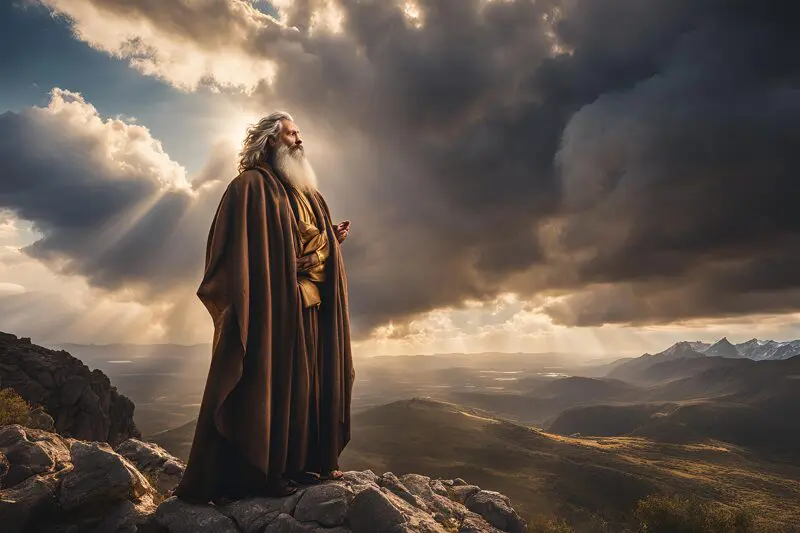
WHAT DO YOU KNOW OR REMEMBER ABOUT THE PROPHETS ELIJAH AND ELISHA?
WHAT STANDS OUT TO YOU ABOUT THEIR LIVES?
When looking at the Old Testament prophets, we tend to think of the greatest prophets as Samuel, who anointed Saul and David as kings. Or we think of Isaiah or Jeremiah who not only prophesied for years until multiple kings, but wrote large books that we still read today. But the Jewish people regard Elijah as the greatest prophet, along with Elisha, his successor. Yet, they wrote no books, and under their ministries, the northern kingdom of Israel never achieved national repentance or produced a single godly king. Yet, they stand at the pinnacle of the prophetic office.
Elisha’s beginnings as a prophet were different from Elijah and all other prophets. The first prophecies of other prophets were pronouncements of judgment and warning. But Elisha’s first act at the poisoned waters was about healing.
John the Baptist was like Elijah, but Elisha was like Jesus. John the Baptist’s first pronouncements were about judgment and wrath to come. But Jesus’ first pronouncements were about the coming kingdom—good news. Just as Elisha’s first pronouncement was good news. God healed the waters through Elisha and God heals our sin through Jesus.
The point about this is that the lives of Elijah and Elisha are types for the coming of John the Baptist and Jesus. This is part of the point of our examination of scripture. We are to look for the pre-figuring of Christ in the Old Testament. So, as we begin our series on the lives of these men we will begin by seeing how these men are types for John and Jesus. We will look at ten contrasts and similarities about Elijah and Elisha compared to John the Baptist and Jesus. First, let’s get a general overview of the lives of Elijah and Elisha.
Elijah’s Life and Ministry
The name, Elijah means Yahweh is God. This declaration is defining in Elijah’s life. His ministry was marked by proving that God was the real god instead of idols and false deities like Baal and Asherah. Elijah emerged during the reign of King Ahab of Israel, a period of spiritual darkness when the nation had largely abandoned the worship of Yahweh for Baal. His ministry was marked by dramatic confrontation with false religion and royal corruption. Elijah announced a three-year drought as judgment for Israel’s idolatry, then was miraculously sustained by ravens at the Brook Cherith and later by a widow at Zarephath. His greatest miracle came at Mount Carmel, where he challenged 450 prophets of Baal to a contest: both sides would prepare a sacrifice, and whichever god sent fire from heaven would be proven true. When Elijah’s altar was consumed by divine fire while the prophets of Baal failed utterly, the people declared, “The Lord—he is God!” (1 Kings 18:39) This vindication of Yahweh’s supremacy stands as Elijah’s defining moment. Despite this triumph, Elijah later fled in fear from Queen Jezebel’s threats, revealing the human frailty beneath his prophetic power. His ministry concluded when he was taken up to heaven in a whirlwind, riding in a chariot of fire—a unique departure that underscored his exceptional status.
WHY DO THE JEWS REGARD ELIJAH AS THE GREATEST PROPHET?
Elijah stands as the greatest prophet of the Old Testament era. Elijah’s stature emerges partly from the historical moment he occupied—a time of national spiritual crisis when King Ahab’s wife Jezebel was promoting Baal worship and persecuting the Lord’s prophets. God raised up Elijah, whose very name meant “the Lord is God,” to call the nation back to himself. His confrontation with hundreds of pagan prophets on Mount Carmel, where the Lord miraculously sent fire from heaven to consume his offering, halted the spread of Baal worship in the nation. This wasn’t merely a personal victory but a decisive intervention that shaped Israel’s religious trajectory.
Beyond his immediate impact, Elijah’s significance extends through his unique theological role. After years of faithful service, he was taken to heaven without dying. His greatness is further attested by his appearance with Moses during Jesus’ transfiguration, where Moses represented the law and Elijah represented the prophets. This pairing elevates him to the highest echelon of biblical figures.
Finally, Elijah became the archetype for prophetic ministry because he boldly confronted religious and political leaders on theological orthodoxy, moral purity, and social justice; preached repentance in the face of God’s judgment; authenticated his message through miracles; and operated outside traditional institutional structures as “the voice of one crying in the wilderness.” The Lord promised to send an Elijah figure to prepare the way for the Messiah—not the ancient prophet reincarnated, but one with the same prophetic power and mission. This eschatological significance ensures that Elijah’s influence transcends his own era, making him foundational to how subsequent generations understood prophecy itself.
WHAT STANDS OUT TO YOU AS THE GREATEST THING ABOUT ELISHA’S MINISTRY?
Elisha’s Life and Ministry
Elisha’s name means God is salvation. This was the mark of his ministry. Elisha was always engaged in acts of salvation: saving people from poisoned waters, saving from leprosy, saving from a foreign army, saving from poverty, and so on.
Elisha prophesied through the reign of six kings over a sixty year period. He was involved in affairs of state. He died some time around eighty years of age.
Elisha succeeded Elijah after requesting and receiving a double portion of his mentor’s spirit. Where Elijah was confrontational and solitary, Elisha was more accessible and integrated into Israel’s social fabric. He performed miracles that directly benefited ordinary people: he purified poisoned water at Jericho, multiplied a widow’s oil to pay her debts, raised the Shunammite woman’s son from death, and healed Naaman the Syrian general of leprosy. His most striking miracle involved making an axehead float in water—a seemingly minor act that demonstrated divine power over natural law. Elisha also performed miracles of judgment, such as striking the Syrian army with blindness and later with sight. Unlike Elijah, Elisha engaged with kings, counseled military leaders, and maintained a school of prophets. His ministry spanned sixty years and touched multiple generations, establishing him as a stabilizing prophetic presence during turbulent times in Israel’s history.
Contrasting Approaches
The two prophets exemplify different prophetic styles. Elijah’s ministry was concentrated, dramatic, and confrontational—he challenged kings directly and called down judgment through supernatural signs. Elisha’s ministry was practical and relational—he worked through networks of relationships and addressed both personal and national needs. Elijah operated primarily in the wilderness and on mountaintops; Elisha moved through cities and courts. Yet both were utterly committed to calling Israel back to covenant faithfulness with God.
Legacy and Impact
Both prophets left indelible marks on Israel’s spiritual consciousness. Elijah became the archetypal prophet, so revered that Jewish tradition expected his return before the Messiah. Elisha’s legacy was more institutional—he trained prophetic successors and established patterns of prophetic counsel that influenced Israel’s leadership. Together, they represent the fullness of prophetic ministry: confrontation and compassion, judgment and mercy.
HAVE YOU HEARD OF “LONE RANGER CHRISTIANITY?” CAN GOD USE A PERSON VERY MUCH WHO IS ALWAYS A SOLITARY PERSON?
CONTRASTS & SIMILARITIES
- Elijah was a solitary man (I Kings 17:2, 18:1, 19:4,9). Like John the Baptist, alone, in the desert (Luke 1:80). Elisha was a man of the people (II Kings 2:19, 4:38, 6:1-4). Jesus was a man of the people (Matthew 11:7, Mark 5:27, Luke 10:3, John 6:24).
Sometimes solitary men, or introverts, don’t seem like the Lord would be able to use them much. But, sometimes the most dynamic times of spiritual growth and power come through being alone with God to let him speak or empower. Elijah had times of aloneness that prepared him for what was to come: being fed by ravens at a brook until the water ran out, sitting alone at a cave on Mount Horeb waiting for God to speak. These times prepared him for great spiritual victories. Even Jesus had long bouts to get away in prayer (Luke 6:12), or alone time with his disciples to prepare himself for what was next (Mark 6:31).
- Elijah confronted kings (I Kings 17:1, 18:17-18, 21:20-24). John the Baptist confronted Herod the king (John 14:3-4). Elisha confronted no king but did prophesy to them (II Kings 3:13-19, 13:14-19). Jesus confronted no king, he wouldn’t even speak to Herod (Luke 23:8-9).
How would you feel about confronting a president or governor about their sin? Confronting people of power can be dangerous. Both Elijah and John the Baptist suffered for such confrontation. But, sometimes confrontation wasn’t called for. Elisha never did it. Jesus never did it. But their work and other words spoke volumes and leaders were accountable for what they heard. Elisha rebuked Jehoram in II Kings 3:13, but then prophesied for him. Jesus didn’t speak with Herod, but his silence was a judgment of him. Herod paid for his sin when he was eaten by worms, a painful death.
WHAT DO PROPHETS DO? DECLARE TRUTH. FORETELL THE FUTURE. CALL KINGS TO REPENT.
GUESS WHAT ELISHA AND JESUS NEVER DID.
- Elijah called Ahab to repent (I Kings 18:18). John called Herod to repent (John 14:3-4). Elisha never called a king to repent. Jesus never called a king to repent.
- Elijah’s symbol was fire (I Kings 18:38, II Kings 1:10, 2:11). John predicted Jesus would baptize with fire (Luke 3:16). Elisha’s symbol was water (II Kings 2:14, 19-22, 4:40-41, 6:6). Jesus walked on water (John 6:19), calmed the water (Mark 4:39), multiplied fish in water (Luke 5:4-8), turned water into wine (John 2:7-9), and said he provides living water (John 4:10).
Fire is the element that belongs to the story of Elijah. Fire from Adonai determines the outcome on Mount Carmel, fire is present to herald the presence of God at Mount Horeb, and fire devours the soldiers sent to fetch him by King Ahaziah. (1)
Elisha’s element is water rather than fire: He divides the water of the Jordan after Elijah is taken up; his first miraculous intervention consists of throwing salt in poisonous water; he calls forth water for the armies of Israel and Judah in the desert, casts a healing substance in foul-tasting food (vegetables presumably boiled in water), sends Naaman to the Jordan River to wash, and makes iron float like wood in the water of the Jordan. (1)
- Fire in Elijah’s ministry was used in judgment (II Kings 1:12). John threatened judgment with fire (Luke 3:9, 17). Water in Elisha’s ministry was used in saving. Jesus ordered baptism as part of conversion (Matthew 28:19).
- Elijah may have had disciples (Elisha and the school of the prophets, II Kings 2:5). John had disciples (Mark 2:18, John 3:25). Elisha had disciples, (Gehazi and the school of the prophets (II Kings 8:4, 9:1). Jesus had disciples (Matthew 10:1-4).
One great difference between the disciples of Elijah and Elisha and Jesus is that the earlier disciples never measured up to their mentor’s standards. But Jesus said his disciples would do greater works than he did. This was true of the apostles who spread the gospel around the known world. Even today there are people involved in bringing more people to Christ than Jesus ever touched. Did you know that you too can do greater works?
WHAT KINDS OF GREATER WORKS CAN WE DO?
- Elijah’s background is unknown. John’s is little known. Elisha came from wealth. Jesus came from heavenly wealth.
Elisha came from wealth because in I Kings 19:19-21 Elisha is plowing with 12 pairs of oxen. These are large animals that required great care and feeding, which required great means to maintain them. He slaughtered the oxen and provided meat for a whole community.
Jesus came from heavenly wealth in that he was reigning in heaven before he became a man. All things were made by him and for him (Colossians 1:16). Thus, he owned all things.
- Elisha did greater works than Elijah; he did twice as many miracles as Elijah. Jesus did greater works than John. John did no miracles and didn’t have crowds as large as Jesus.
- Elijah did eight miracles. Elisha did sixteen miracles. John did no miracles. Jesus’ life was marked by the miraculous.
When Elijah was taken to heaven, Elisha asked for a double portion of his spirit. That was fulfilled in that Elisha did twice as many miracles as Elijah.
The Gospels record 37 miracles of Jesus. But, Jesus did so many other miracles that John said, “There are also many other things which Jesus did, which if they were written in detail, I suppose that even the world itself would not contain the books that would be written” John 21:25.
- Elisha’s miracles were like Jesus’ miracles. Both men healed the sick (II Kings 5:1-14) and raised the dead (II Kings 4:32-35), though Jesus much more so.
WHAT WE’VE LEARNED SO FAR
- Elijah and Elisha were very different men and God used them in very different ways. One was a prophet of judgment, one was a prophet of salvation.
- Elijah foreshadowed the coming of John the Baptist. Both men pronounced judgment and the need for repentance.
- Elisha foreshadowed the ministry of Jesus. Both men ministered God’s saving power.
- Elijah and Elisha gave no prophecy about Jesus, but their lives were types that helped reveal his ministry, and help us understand it.
INTERPRETATION
- Just as we see John and Jesus in the lives of Elijah and Elisha, we should ask if we see the life of Jesus in us.
In one sense Elijah and Elisha were images of John and Jesus to come. In theology we call this, types. It’s when an earlier thing prefigures a later thing. Just as Elijah and Elisha were types for John and Jesus, so too, we are to be images of Christ, doing what he did, and doing even greater things. Look at what these four men did:
- Works of judgment
- Works of saving, and
- Works of discipleship
We are commissioned to do the same. The Holy Spirit in us does the work of convicting people of judgment to come (John 16:8), that through conviction, people might be saved, and come to be disciples (Matthew 28:19), that is, to grow to spiritual maturity to look like Jesus (Romans 8:29), and do the same works Jesus did (John 14:12).
APPLICATION
Look for things in your life that symbolize what Jesus did for us.
Have you shared your faith with anyone? Have you mentored anyone in their walk with Christ? Have you sacrificed something important to you to bring others closer to Christ? Do you spend long bouts in prayer as Jesus did? Do you recognize these things in others? Do others recognize these things in you? Since the Holy Spirit is in us, maturing us to look like Jesus, then we should be growing in our imitation of him.
- Like Elijah, our lives should be a call to repentance and to follow the one, true, living God.
- Like Elisha, we should seek to work with others to encourage people to know the true God.
- Like John the Baptist, we should point people to Christ and seek to decrease that Christ may increase. We should be less concerned with our name and reputation and more concerned with Christ’s.
- Like Jesus, we should live holy and blameless lives dedicated to God, and be prepared to suffer as he did for the sake of others’ salvation.
(1) Wijk-Bos, Johanna W. H. van. 2020. The Land and Its Kings: 1-2 Kings. Vol. 3. A People and a Land. Grand Rapids, MI: William B. Eerdmans Publishing Company.
www.guywithabible.com